A Graph Showing Why It’s Not a Fun Time to Work in IT

What an awful graph.
Read More about A Graph Showing Why It’s Not a Fun Time to Work in IT

Browse budget-friendly VPS and dedicated server offers by location, virtualization type, and special features like NVMe or DDoS protection.
| North America | Other Locations | More Regions | Virtualization/OS | Specializations | |
|---|---|---|---|---|---|
North America
| Other Locations |
| Virtualization/OS | Specializations | |
What an awful graph.
Read More about A Graph Showing Why It’s Not a Fun Time to Work in IT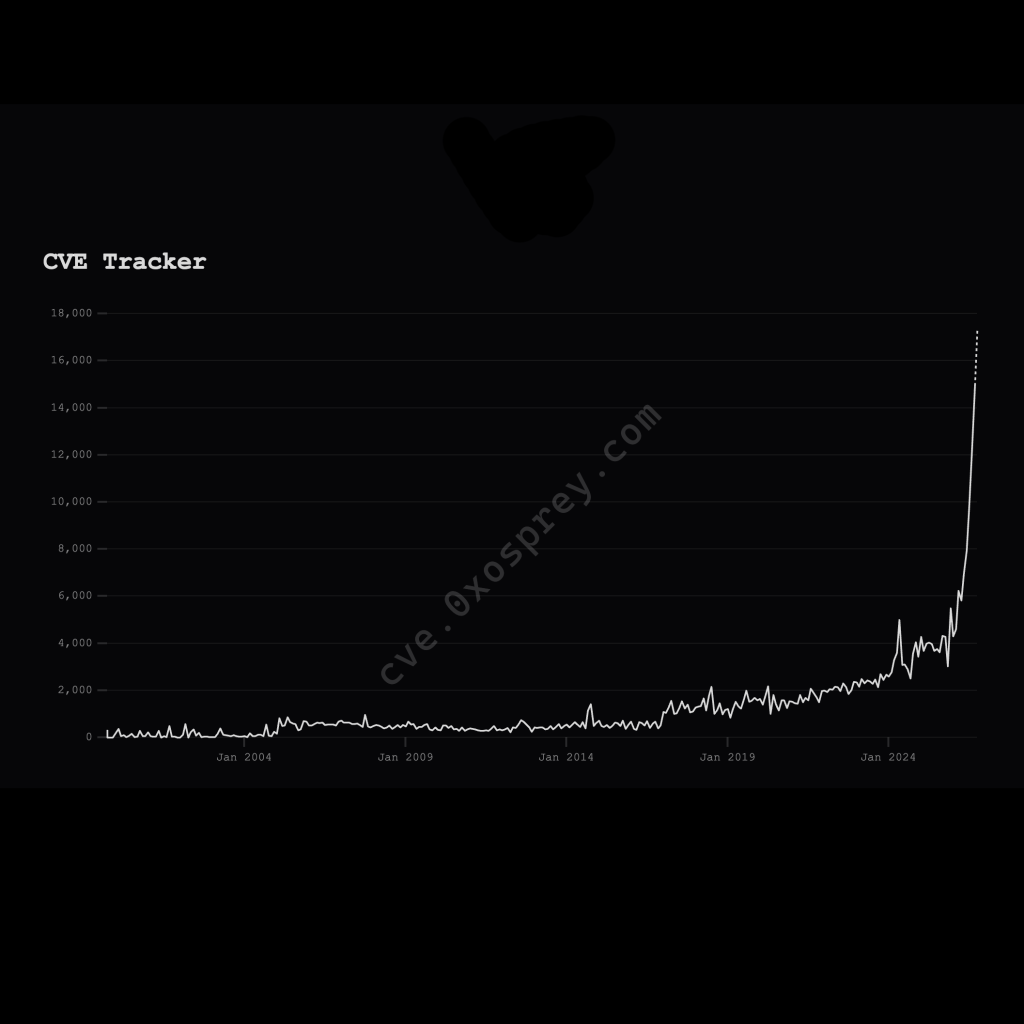
Anthropic, the artificial intelligence company behind Claude, is preparing for what could be one of the largest IPOs in history, with a potential valuation approaching $2 trillion. Two trillion! With a T! Should you jump in on this?
Read More about Anthropic’s IPO is Coming Soon. Should You Buy? Here are the Four Most Important Things to Think About
Here in Halloween season, I went looking for tech-themed horror movies. Your prototypical horror movie is a scary old haunted house but there are quite a few that are high-tech. Once I started to make a list I realize I'd seen quite a few.
Read More about Login to Fear: Tech-Themed Horror Movies for Halloween
On Wednesday, October 21, 2026, a pair of PHP vulnerabilities will be unveiled at 14:00 UTC, which is 10:00 Eastern or 07:00 Pacific. News has rocketed around the Internet because these are very serious CVEs.
Read More about Patch Your PHP! The PHPopaclypse is Upon Us!
As you my have read, recently OpenAI dropped a bombshell on the math community by posting proofs of 372 open problems. They were dropped all at once, in a massive GitHub dump. But keep these three important things in mind.
Read More about Mathematicians Upset About OpenAI’s PR Stunt Need a Chill Pill
FlipperHost is back and has some great deals for our readers in Atlanta, New York, and Los Angeles. Need some CPU-generous hosting? Go for their KVM offers. Just need a lot of network? Try their OpenVZ solutions. Either way, you'll save big.
Read More about Get Cheap Hosting in LA, NY or Atlanta from FlipperHost – Only $29.99/Year for a 2GB VPS!
Recently, I read an article about device fingerprinting, which argues that we're in the post-tracking-cookie era. They're no longer needed, because every browser can be fingerprinted with 100% accuracy. Naturally, I had to test it.
Read More about Browser Fingerprinting is Frighteningly Accurate
Today we're featuring Cloudinium, a provider that has three Phoenix-area colocation launch offers for your consideration. Their Tempe, Arizona facility is now accepting new colocation deployments, with Early Bird discounts available for 12 months on our 1U, 2U, and 4U plans.
Read More about Early Bird Discounts on Cheap Colocation! $29/Month in Phoenix from Cloudnium!
This is Virtbase's first offer on LowEndBox, and they have quite a lot to offer, including an open source billing/control panel on GitHub and feature-packed offers!
Read More about Virtbase, the EU Provider with an Open Source Control/Billing Panel! Awesome Deals for EU Customers Only!
Happy Halloween from ServerHost! No tricks here, just a wonderful treat: $500 in cold hard cash! Plus you can get a 2GB VPS for only $16.99/YEAR or a 4GB VPS for only $27.99/YEAR! Wow!
Read More about 🎃 Let’s Help Our LowEndTalk Members Win $500 in ServerHost’s Giveaway! 👻
Remember when we announced that RackNerd and AdminBolt were giving away 100 FREE VPS for a year, plus 20 lifetime AdminBolt licenses? Well, all 100 VPS instances have now been given away. But apparently, 100 wasn’t enough!
Read More about More of RackNerd & AdminBolt! Here’s 50 More FREE VPS + 10 Lifetime Licenses!
I guess Velohost has never heard of inflation. Eight months ago, they were selling a 4GB VPS with 25GB of disk and 1TB of bandwidth for 3.00€/month. Now they're selling that same package for only 2.60€/month!
Read More about Velohost Returns With Even Cheaper Prices! Get a 4GB VPS for Only 2.60€/month!
If you're an Office 365 subscriber, you probably got an email titled "Upcoming Changes to Your Microsoft 365 Subscription" late last week. If you didn't read carefully, you may not be aware your service is being downgraded.
Read More about Microsoft Slashes the Storage that Comes with Your 365 Plan by 60%

FlipperHost is back and has some great deals for our readers in Atlanta, New York, and Los Angeles. Need some CPU-generous hosting? Go for their KVM offers. Just need a lot of network? Try their OpenVZ solutions. Either way, you'll save big.
Read More about Get Cheap Hosting in LA, NY or Atlanta from FlipperHost – Only $29.99/Year for a 2GB VPS!Today we're featuring Cloudinium, a provider that has three Phoenix-area colocation launch offers for your consideration. Their Tempe, Arizona facility is now accepting new colocation deployments, with Early Bird discounts available for 12 months on our 1U, 2U, and 4U plans.
Read More about Early Bird Discounts on Cheap Colocation! $29/Month in Phoenix from Cloudnium!This is Virtbase's first offer on LowEndBox, and they have quite a lot to offer, including an open source billing/control panel on GitHub and feature-packed offers!
Read More about Virtbase, the EU Provider with an Open Source Control/Billing Panel! Awesome Deals for EU Customers Only!I guess Velohost has never heard of inflation. Eight months ago, they were selling a 4GB VPS with 25GB of disk and 1TB of bandwidth for 3.00€/month. Now they're selling that same package for only 2.60€/month!
Read More about Velohost Returns With Even Cheaper Prices! Get a 4GB VPS for Only 2.60€/month!Godlike.Host is back with some great pricing for our readers. You'll need our special coupon code to get these deals!
Read More about Exclusive LowEndBox Pricing: 2GB KVM VPS for $1.83/Month First Year! Godlike.Host is Back!
Low prices...high RAM...generous bandwidth...must be AffordableBytes! You're going to love these offers in Frankfurt, Germany.
Read More about High Ram, Low Prices? Must be an AffordableBytes Offer! Get a 6GB VPS for Only €3.49 / Month!
SoftShellWeb - who's been sharing offers with us since 2020 - is coming on strong with a fantastic offer for their new Linux Container (LXC) lineup, with 1GB VPSes in Los Angeles starting at only $9.95/year! Those are IPv6-only, but they have IPv4 as well for only $17.95 a year!
Read More about A VPS for UNDER $10/YEAR! Wow! SoftShellWeb Has *DEALS* in Los Angeles – NVME, 10GBPS, DDoS Protection Included!
The ability to run programs automatically is one of the great liberating powers of computers. In Unix, it's common for users to schedule jobs using cron or at (or with systemd, timers). But what if you want to run a job not based on a schedule but rather in response to an event? With python3-inotify.
Read More about Make Your VPS Reactive: Easily Write Scripts that Fire Automatically When Filesystem Events Occur with python-inotify
I installed unattended-upgrades, but Debian wasn't upgrading. Let's get to the bottom of this puzzle.
Read More about Debian’s Unattended Upgrades is Not Enabled After You Install It – Why? Let’s Deep Dive That
Would you like your own self-hosted disposable email? It's marvelously useful and Inbucket makes it easy. Let's do this!
Read More about Create Your Own Self-Hosted White-Label Mailinator-Like Disposable Email (Updated for 2026)
LowEndTalk member @forest shared an interesting technique to enable AES-NI even when the provider doesn't pass it through.
Read More about Re-Enabling AES-NI on VPSes That Don’t Pass the Feature Through
Nearly a year ago, the newest site in the LowEnd family launched: ServerVerify! This site is the largest collection of YABS (Yet Another Benchmark Script) benchmarks on the planet, with over 10,000 user-submitted reports in its database. This project had been a dream of LowEnd owner Jon Biloh's for quite a while and it's been a huge success. Let's check in on how it's going and what the future holds.
Read More about 10,000 Benchmarks! The Future of ServerVerify: Interview with Jon Biloh
We recently sat down with M'Barek Dhibi, CEO of Pawnhoster, to learn more about this emerging company and what they offer in shared - and soon VPS - hosting.
Read More about One Step at a Time: Interview with M’barek Dhibi, CEO and Founder of Pawnhoster, Plus a Deal for You!
Today we're speaking with Andrew, the CTO of AVS ISP, an Albanian-based community provider we've featured several times before. They're a neat husband-and-wife team who's brought some great offers to our community. And today is no exception! They've got a special offer for us.
Read More about Hello From Albania! Enjoy an Interview with Andrew from AVS ISP – And a Special Discount Code!
JustHosting has built its growth on a simple foundation: reliability, responsive support, and fair pricing. We caught up with founder Anton Pankratov to talk about how it all started, how the team keeps their infrastructure solid across dozens of countries, and what users should know when picking a VPS. We also looked ahead at what’s coming next — and why their approach continues to resonate with more and more customers.
Read More about JustHosting: Growth Story, Service Philosophy, and Future Vision — An Interview with Founder Anton Pankratov
ServerVerify is a member of the LowEnd family of sites, and it's an awesome tool for researching hosting providers. We recently hit the 10,000 YABS mark. ServerVerify recently launched a Provider Comparison tool that is really cool. We just released a YouTube video that shows everything that's going on with the site, so check it out
Read More about Have You Checked Out ServerVerify Lately? 10,000 YABS! New Features!We're super-excited to release our full-length documentary on ForgeMind, a controversial AI companion service that charges up to $10,000 to build an AI companion for you. It's all part of a scheme to grant their founder immortality.
Read More about LowEndBoxTV: The Cult of ForgeMind AI: True Belief, Sarah’s Purple Octopus, and the Quest for Immortality
We're in the middle of a series on LowEndBoxTV on the exploding world of AI companions. This market is huge and millions of people are using these applications and services. We're going to give you a comprehensive overview, a deep dive into the tech, some problems and issues, the major options, and finally a DIY tutorial using SillyTavern. Enjoy!
Read More about LowEndBoxTV: AI Companions, Part 5: SillyTavern Tutorial! Setup, Config, How to Write a Character Card, and MORE!
We're in the middle of a series on LowEndBoxTV on the exploding world of AI companions. This market is huge and millions of people are using these applications and services. We're going to give you a comprehensive overview, a deep dive into the tech, some problems and issues, the major options, and finally a DIY tutorial using SillyTavern. Enjoy!
Read More about LowEndBoxTV: AI Companions, Part 4: Pitfalls and Problems

Oct 24, 2026
Oct 23, 2026
Oct 22, 2026
Oct 22, 2026
LowEndBox is a long-running resource for cheap VPS, budget hosting deals, and hosting industry news.
Our coverage blends curated offers with community insight and practical experience.
LowEndTalk is our active hosting discussion forum, while
ServerVerify helps users compare real-world server performance
and provider data.
[Learn more about our Platform]
who needs cookies? …
Interesting that the AdminBolt team is showing up in the LowEndTalk thread and taking feedback directly, since that' …
thanks for this …
Fun list. Tech-themed horror always lands well around Halloween, and it is interesting how many of these films still …
I’ve had a positive experience with GTHost’s VPS service in Toronto. One of the things I liked when choosing the ser …



PulsedMedia / Aug 11, 2026
systemfreaks / Oct 24, 2026
NDTN / Dec 02, 2022
comXyz / Oct 23, 2026